In the northern highlands of Peru, the rural communities of the Tambillos Valley hold on to their collective spirit to preserve the Inca Trail. Yet in recent years, climate threats and the weight of modern life have shaken their traditions.
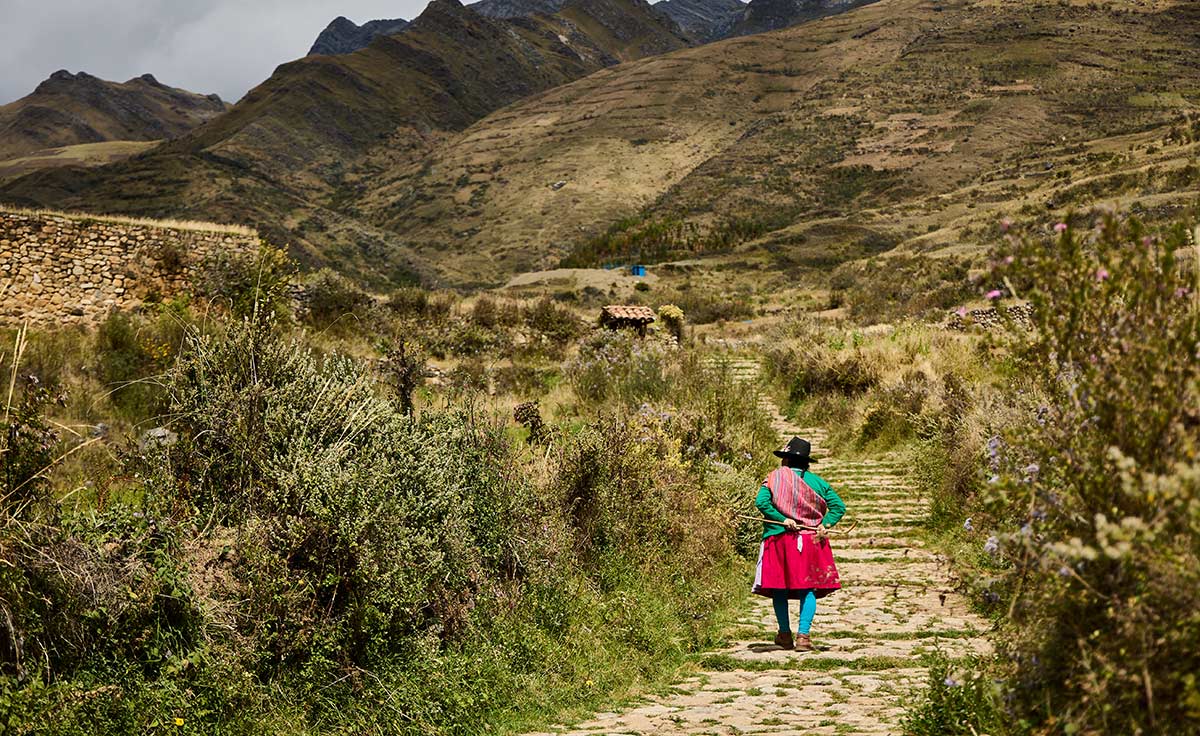
Epifanía Ocaña walks lightly. She carries a small bag with a few potatoes and ullucus she managed to harvest for lunch. A couple of decades ago, around this same time in late June, she would have needed help transporting her crops. Judging by the greenish hues of her fields, she estimates that the corn and barley won’t be ready until August. “It used to stop raining in April. Now it rains until June. The harvest times have shifted,” she says.
Climate change is disrupting agricultural cycles and, at the same time, putting at risk the cultural landmarks that give meaning to community life in the Peruvian Andes. Meanwhile, in research centers, meteorologists are recording data that confirm these changes.
Epifanía walks carefully. There are still puddles from a recent rain on the path that leads home. She crosses the hamlet of Soledad el Tambo along the Inca Naani, the name given in the Áncash region to the legendary pre-Hispanic road that once connected Incan settlements.
Despite the damp sections, the path is still navigable. The cobbled ground, restored by locals and technicians from the Ministry of Culture’s Qhapaq Ñan Program a decade ago, still endures the strain of the Andean weather. So do the stone walls that line nearly two miles of the restored trail.
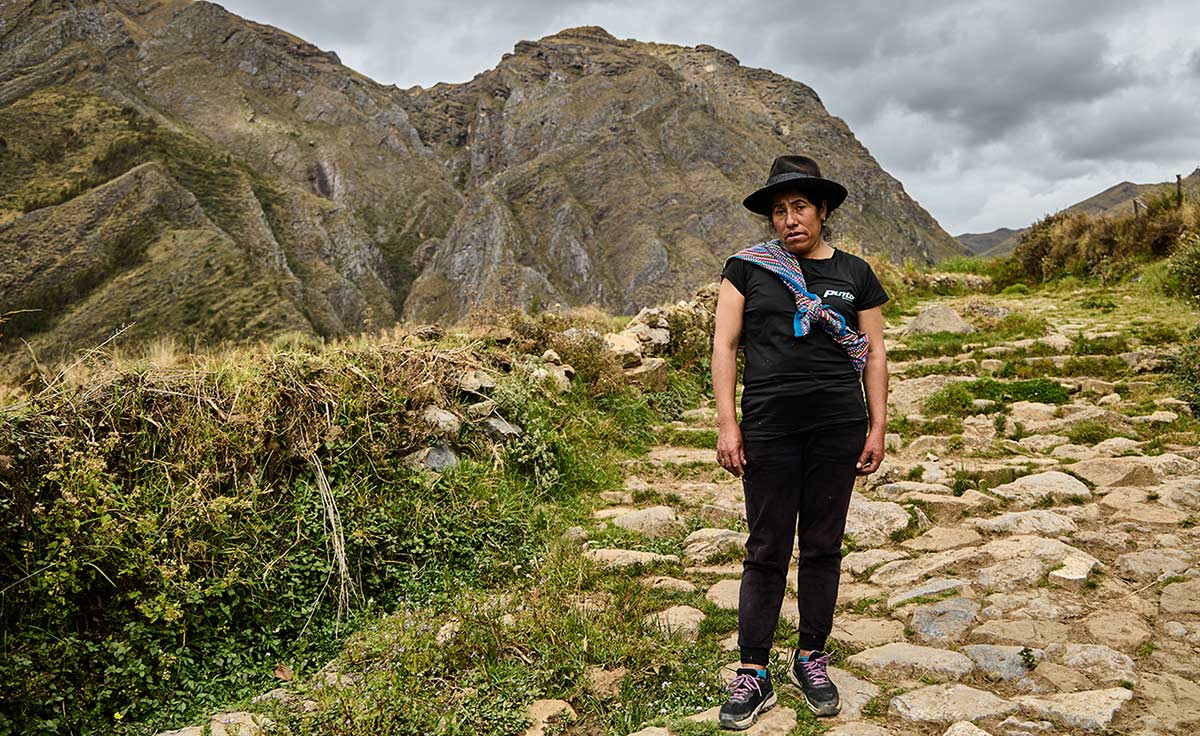
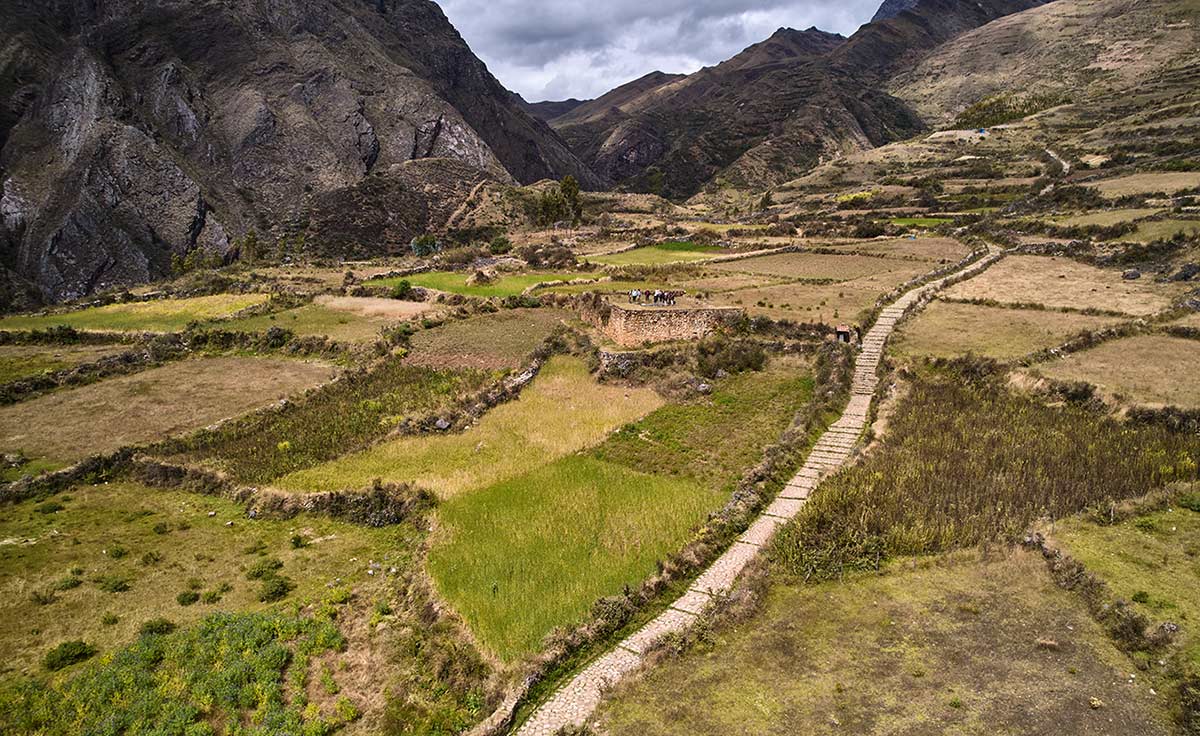
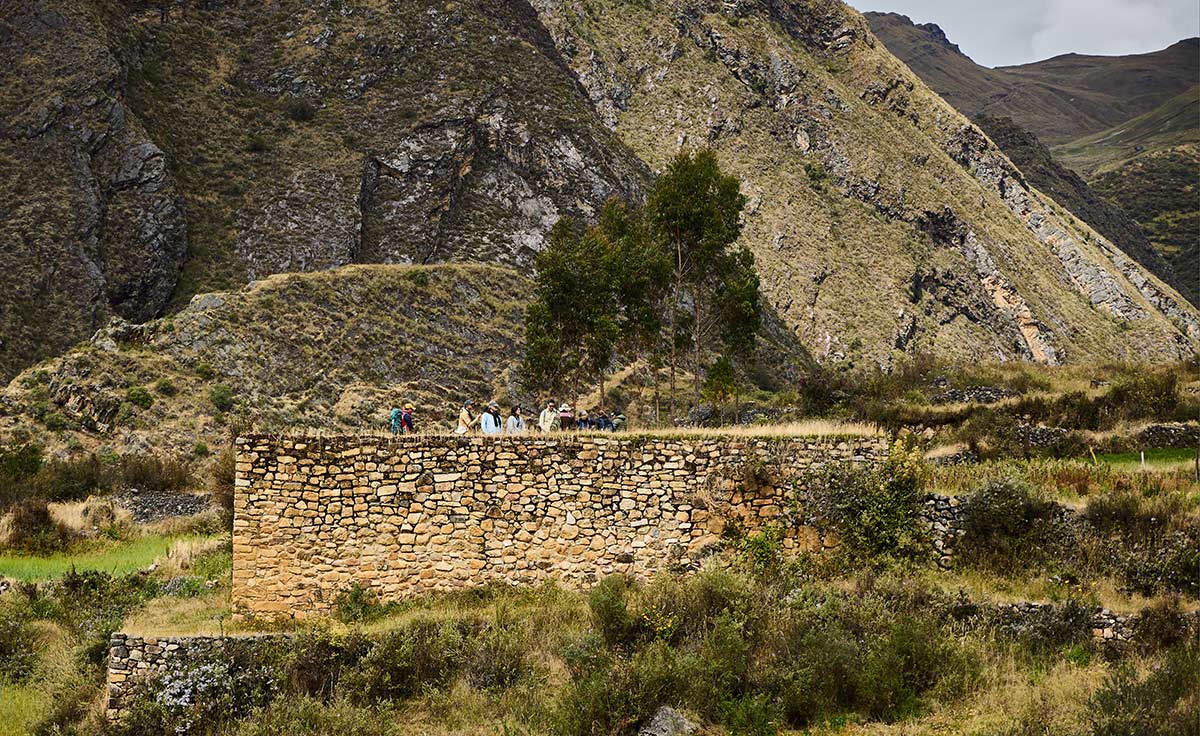
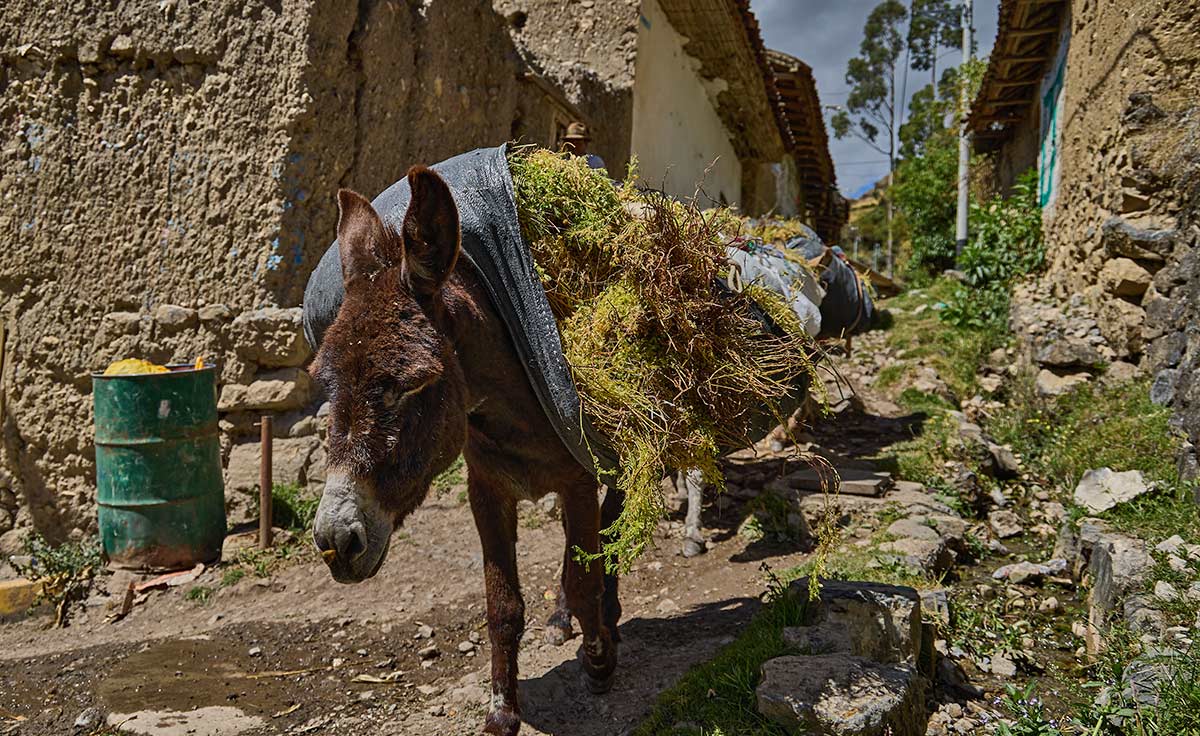
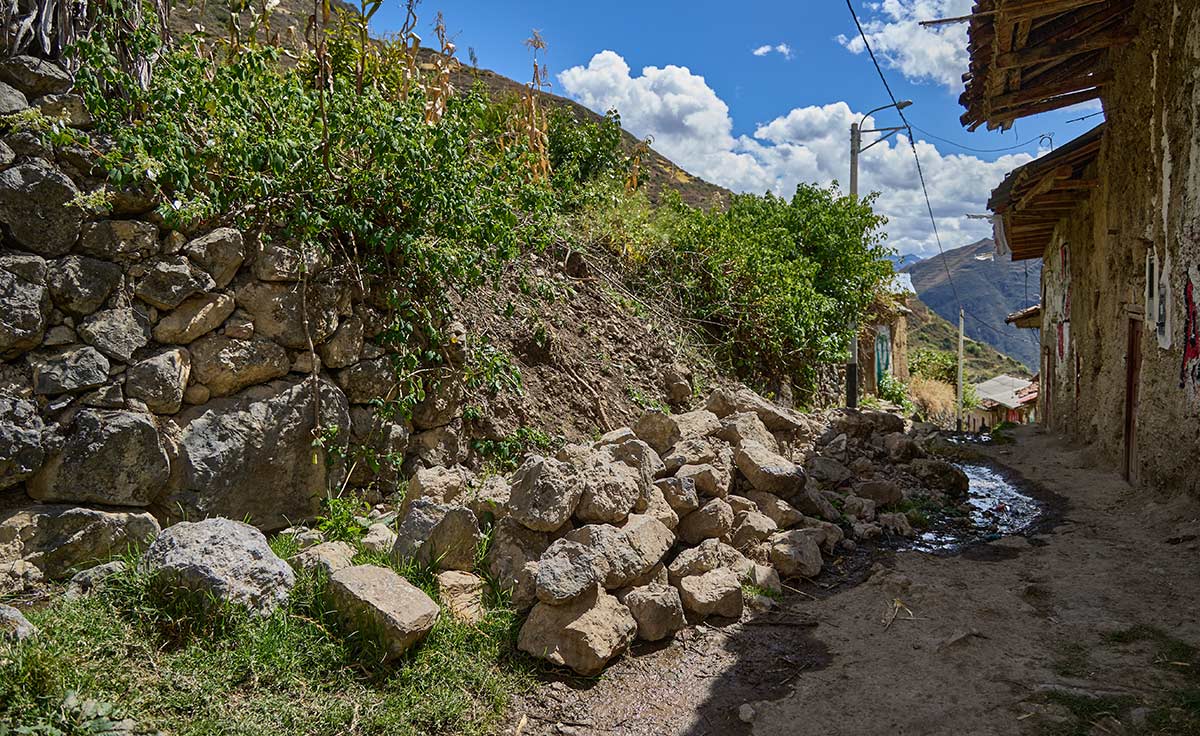
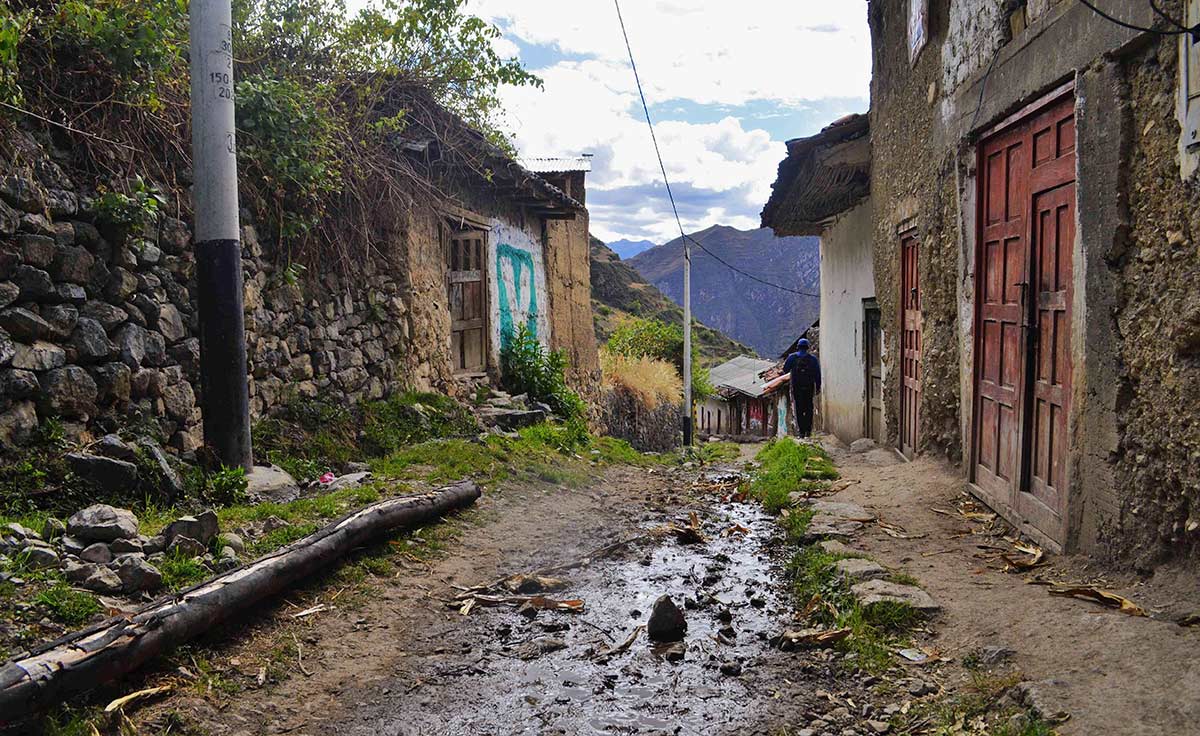
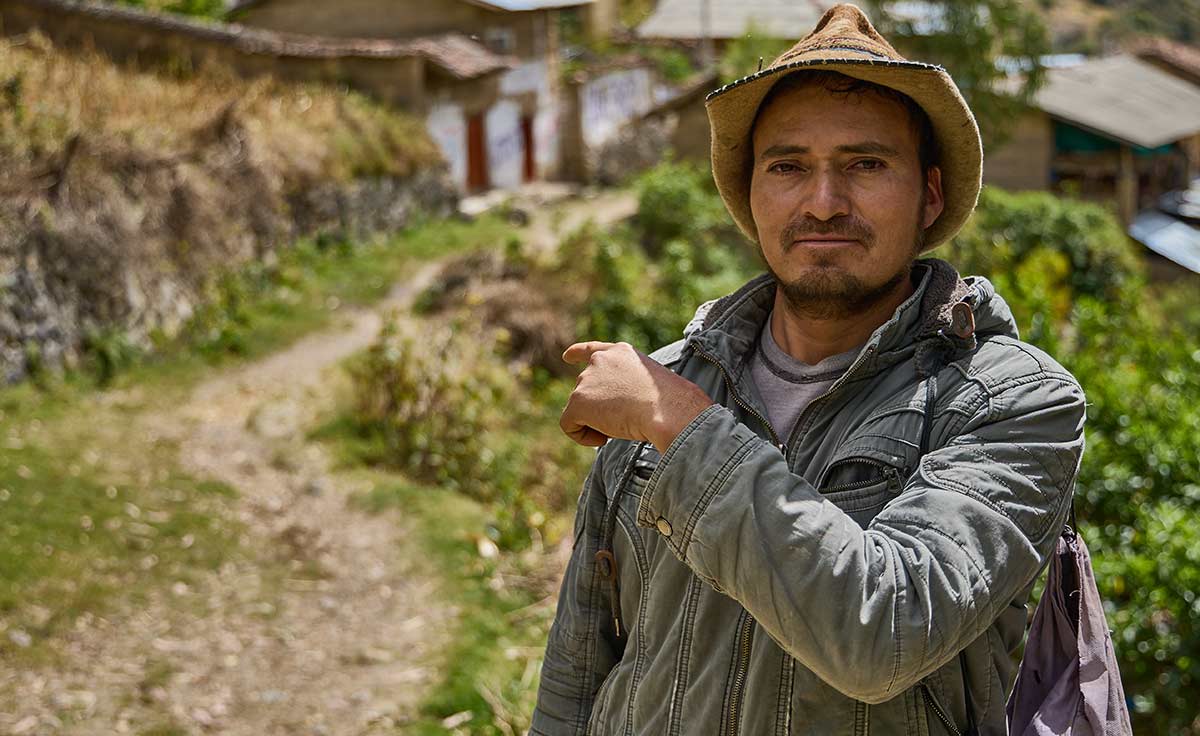
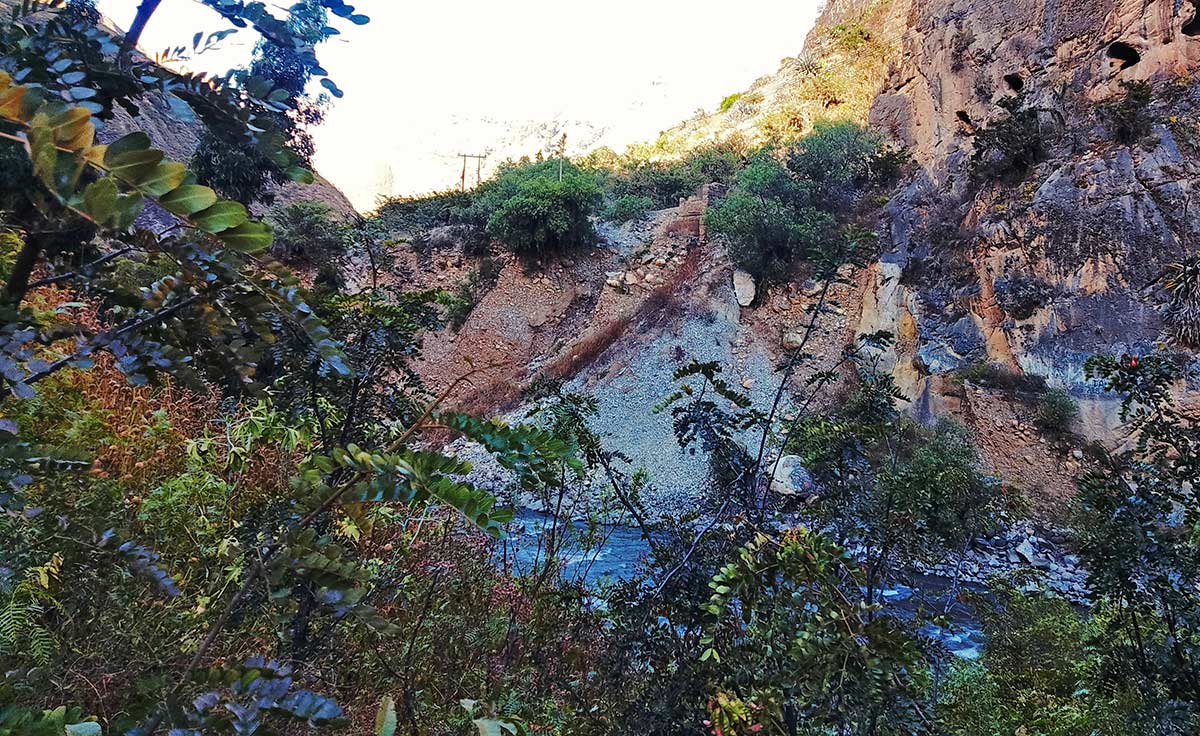
The landscape shifts at the entrance to the village. There, the stone walls vanish. The ground is no longer compacted and no markings remain. From that point, the Inca Trail continues as a simple rural trail, descending about six miles toward the settlement of Castillo.
Storms often leave long stretches of the route washed out. Stormwater rushes over the path and at times, rocks and vegetation slide down from the slopes. More than the frequency, Epifanía says, it’s the intensity of the rain that has changed. “When I was a child, it would rain softly all day. Now, in twenty minutes, it pours all at once,” she explains.
At the Geophysical Institute of Peru, meteorologist Yamina Silva observes the same pattern. Reviewing data from the past two decades, she found that the rainy season in the highlands now begins two months later. And when the rains do come, they hit with such force that they cause destruction.
“If we don’t get low-intensity rains in September and October, by December the soils are dry and impermeable, unable to absorb large amounts of water. That’s when the huaicos happen,” she explains.
A huaico — a landslide of stones, mud and debris triggered by torrential rain — is no longer an isolated event in the Andes but a regular threat to local populations. During the first half of 2025, Áncash reported 81 of these incidents, according to the regional Emergency Operations Center.
As they pass, huaicos destroy crops, livestock, homes and the roads. Locals say they’ve often been trapped by them.
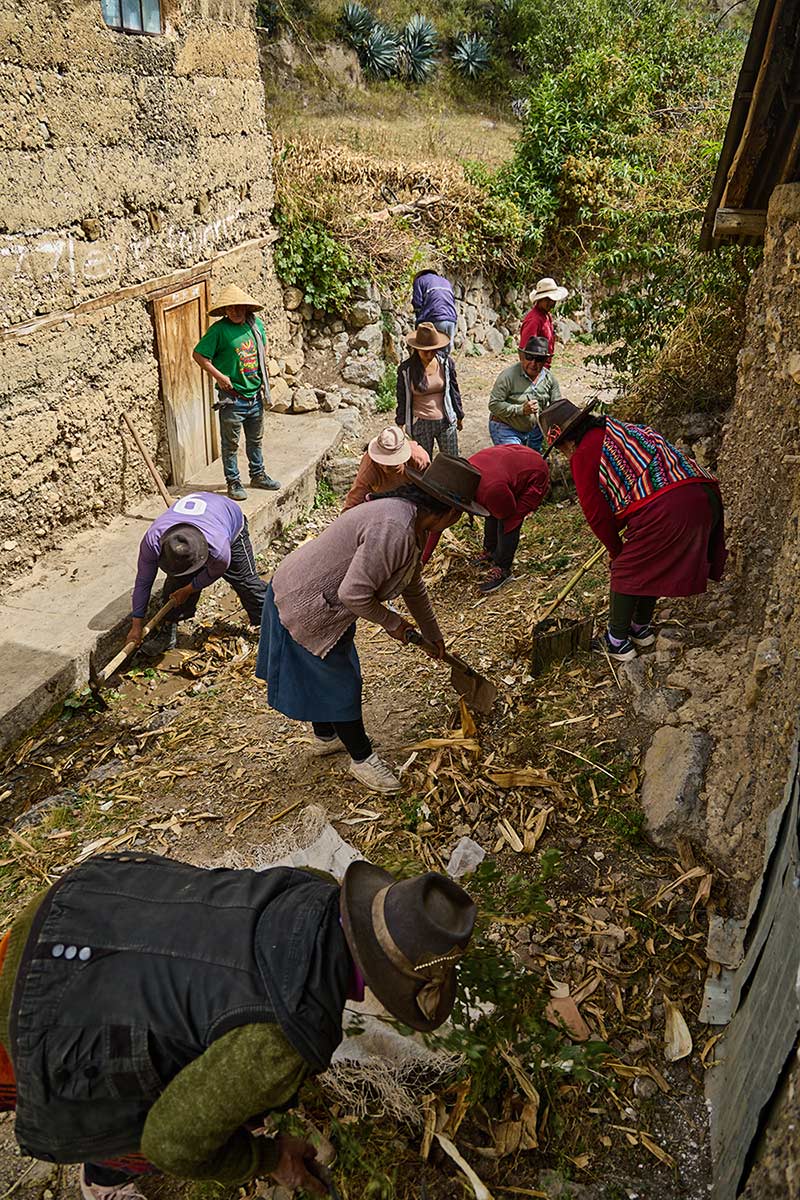
In Valle de Tambillos, several communities connected to the Qhapaq Ñan still have communal workdays to maintain and clean the roads. This ancestral practice is known locally as Naani Aruy.
Photo: Jair Guillén
Daily rainfall in Huari, Peru (2016 - 2025)
A Ritual on the Edge of Extinction
During the Inca Empire’s expansion, young messengers ran along the extensive network of roads that spanned the empire carrying knotted cords used for record-keeping.
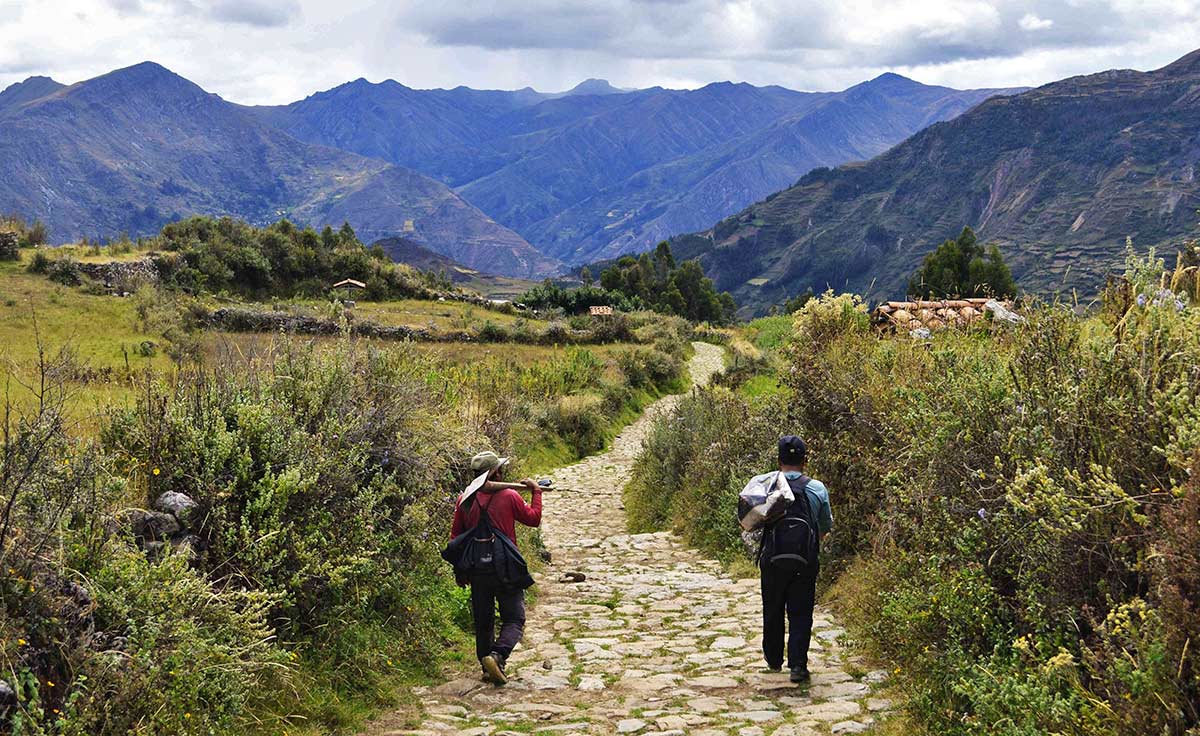
A statue of one of these ancestral messengers stands guard over the main square of Castillo, a small mountain village in the Áncash highlands with about 300 residents. Just three blocks away runs the Inca Naani, the ancient road where five centuries ago, the young messengers once carried messages across the empire. Today, villagers walk that same path to reach their fields, carry their harvests and guide their donkeys, sheep and cattle along its worn stones.
From the upper parts of Castillo, the trail appears as a thread weaving through the Tambillos Valley’s distinct ecological zones, stretching from about 7,500 to 15,000 feet above sea level. Like a scar, it winds across dozens of cultivated plots. Ricardo Chirinos, an archaeologist overseeing the World Heritage–listed sections of the Inca Trail, or Qhapaq Ñan, explains that this valley has at least two thousand years of agricultural development. Long before the Incas, the Pincos were here.
“Roads serve a purpose,” says Dante Solís, Castillo’s community president, a position that, in rural areas, carries on the legacy of ancient community leaders. He is rarely seen without his wide-brimmed hat. “The sun is getting harsher every year,” he remarks. Among his responsibilities is organizing the communal workday devoted to cleaning and maintaining the trails.
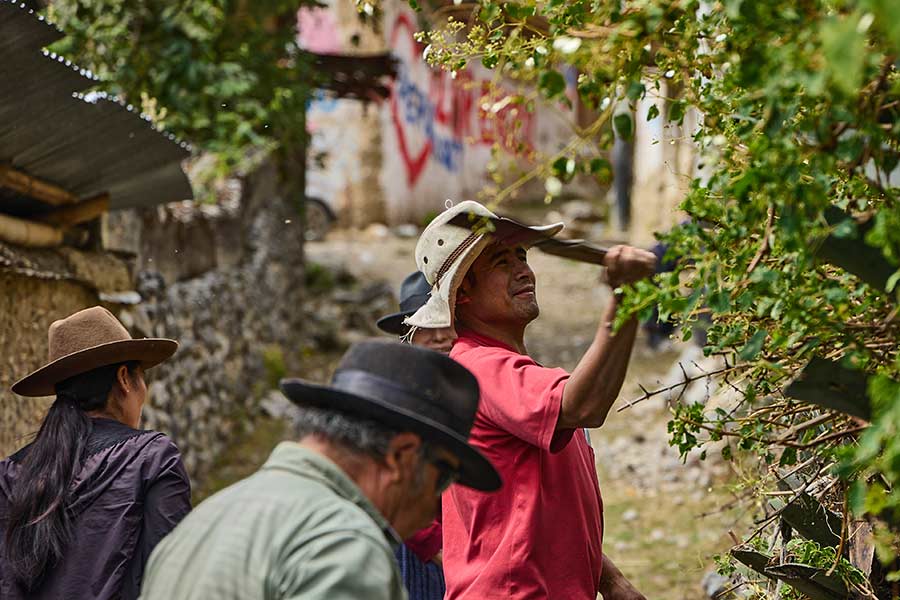
Women and elders also take part in the cleaning and maintenance of the Qhapaq Ñan. In 2023, UNESCO’s International Council on Monuments and Sites (ICOMOS) recognized Naani Aruy as an example of climate change adaptation grounded in ancestral tradition.
Photo: Jair Guillén
These collective tasks used to take place twice a year around the rainy season. Due to changing weather patterns, that rhythm has shifted. This year, shortly after the winter solstice, Dante called the community together because rocks and plants left by hurricane-force winds were blocking the trail.
With picks and shovels, the men clear the path of dirt and rocks. Meanwhile, women and children use machetes and sickles to cut back brush and weeds clogging the drainage channels. The work lasts five hours. No one gets paid, but no one complains. In Andean culture, working for the collective good is part of community life.
A faded sign along the trail still hints at the site’s importance. “Inca Naani – World Heritage Site,” it reads, though much of the lettering has been worn away by time.
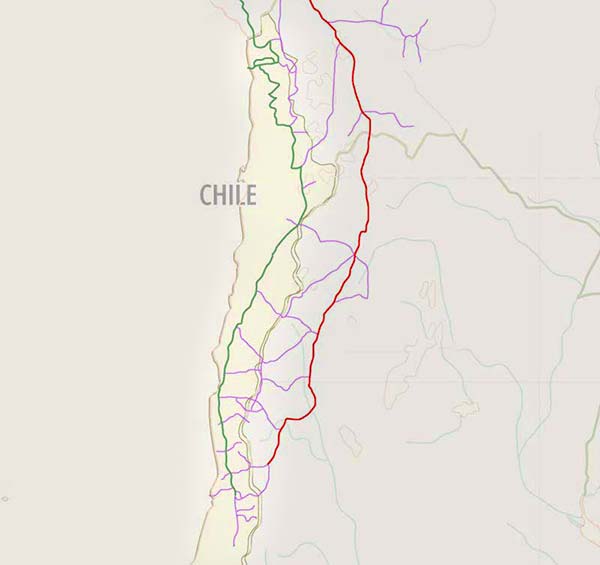
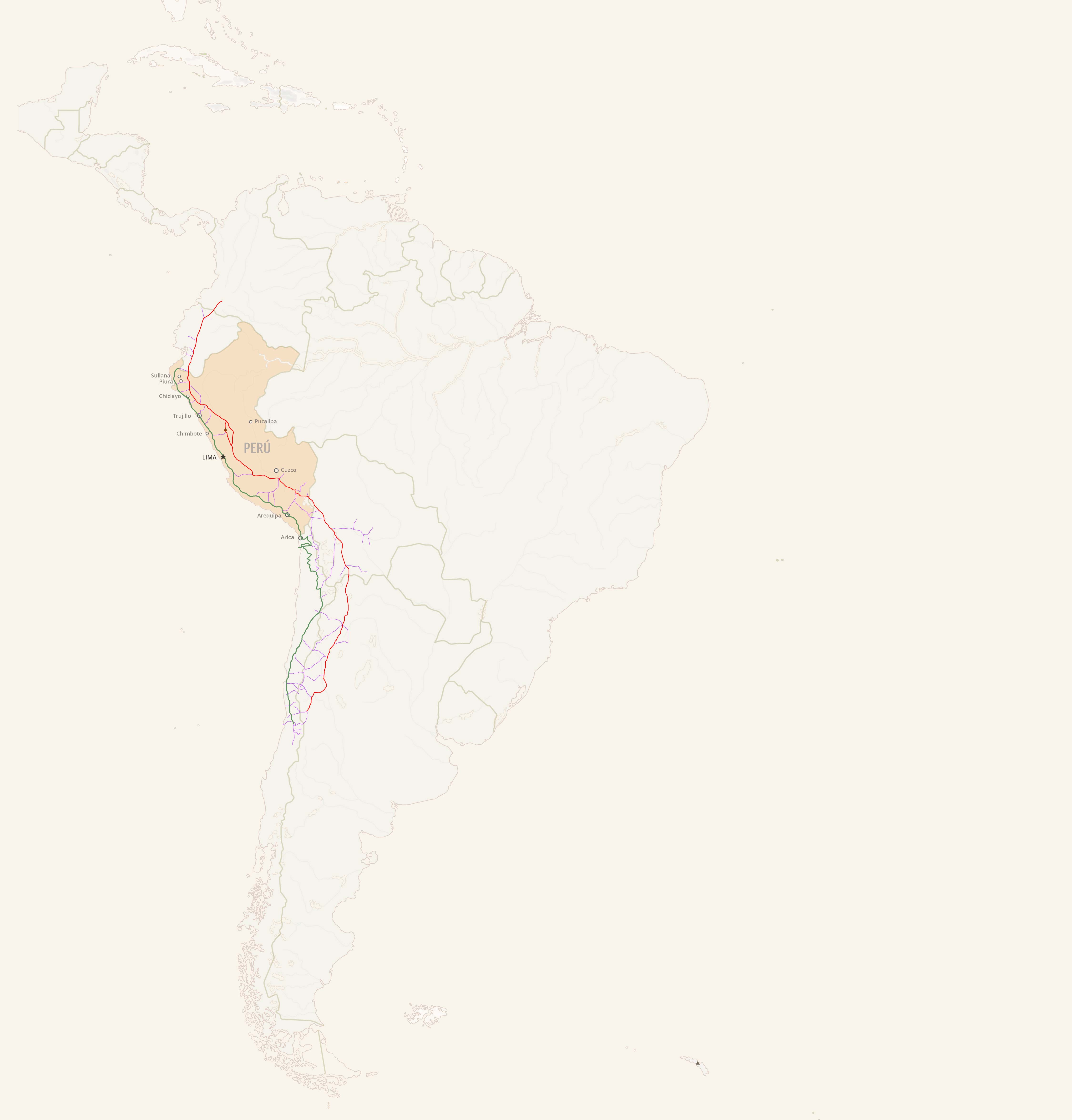
This stretch is part of the 155 miles of the Andean Road network in Peru that was recognized by UNESCO as a World Heritage Site. “We’re proud of this legacy — not every town has an Inca Trail running through it,” says Dante.
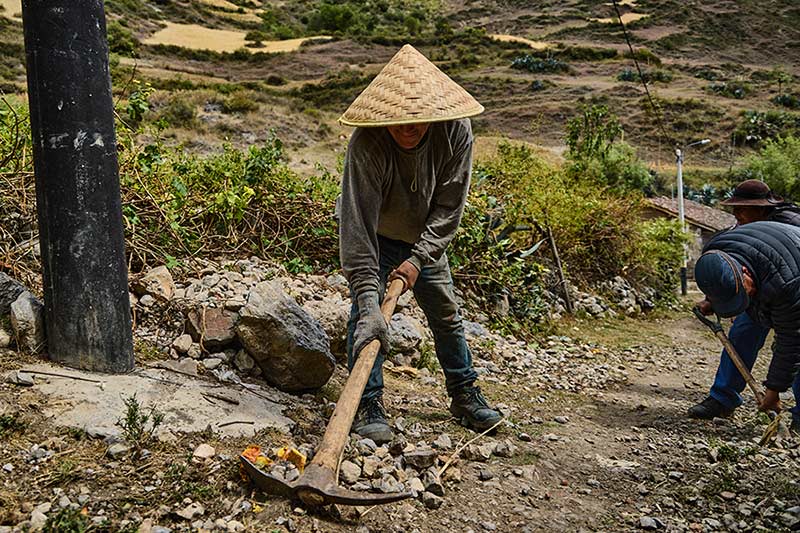
During communal maintenance work, men are in charge of digging and leveling the soil with picks and shovels.
Photo: Jair Guillén
That pride is tempered by reality. After the workday, sitting outside a house, Dante chews coca leaves shared among neighbors. He looks at the freshly cleared path, knowing it won’t withstand the next storm.
Whenever heavy rain comes, the water floods the path, seeps into adjacent homes, and in minutes, the ground floors are underwater. Families spend days bailing the water out.
Such episodes are increasingly common. The elders speak with the same concern that meteorologist Silva feels when she reviews her data. According to records from the Recuay weather station, the area now receives 30% more rainfall in shorter periods than in the 1960s.
Castillo’s residents have asked provincial authorities to install drainage channels to prevent flooding but their requests have run into heritage restrictions. Any intervention on such sites must comply with Law 28296, which gives the Ministry of Culture the final say. “The State doesn’t authorize us. They told us the Qhapaq Ñan is untouchable,” the residents say.
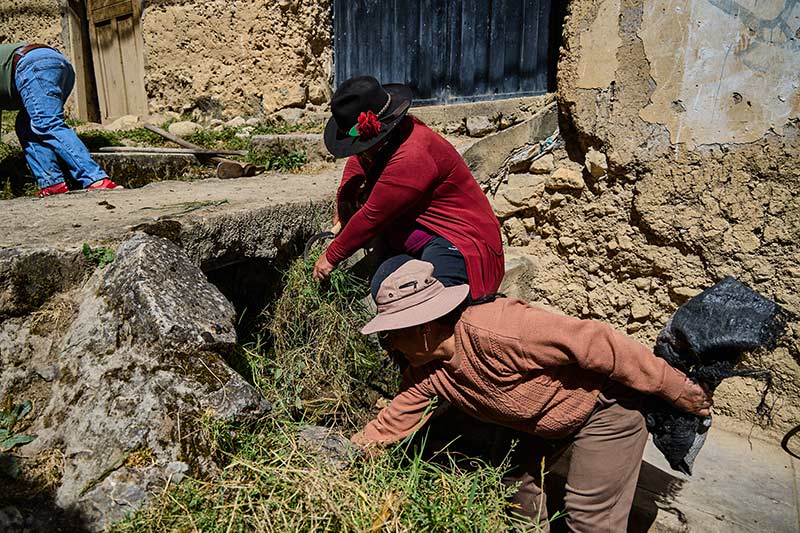
Clearing the drainage channels that run alongside the road is essential to prevent flooding during intense rainfall.
Photo: Jair Guillén
Tradition and/or Survival
“Climate change is still a potential threat to the conservation of the trail,” says Víctor Curay, coordinator of the national headquarters of the Qhapaq Ñan Program.
Although his words seem to temper the problem, each visit to the six UNESCO-listed sections reveals new damage. In the most recent report (2023–2024) submitted by the Peruvian government to UNESCO, rainfall was found to affect 87% of the Huánuco Pampa–Huamachuco segment (which includes the Tambillos Valley). Rockfalls, the second most frequent issue, impact 68% of that section.
As the conversation continues, Curay acknowledges the challenge facing the program’s hundred specialists. “In recent years, we’ve had rain emergencies every year. Something is changing and it requires intervention,” he says.
Requests for trail repairs—mostly to install drainage—arrive constantly at the program’s offices. Curay says each case is reviewed carefully. “It’s not that heritage sites can’t be touched,” he explains. “They can, but only under specific conditions, given their complexity and value.”
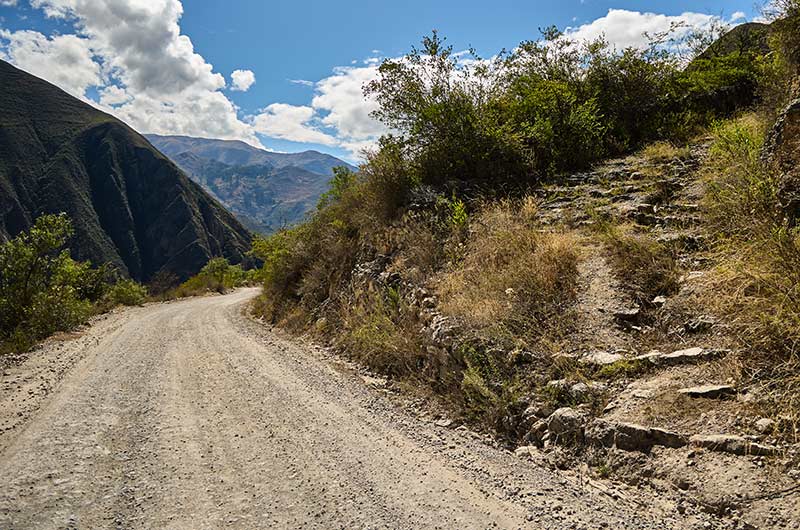
This ancient road system has been affected over the past two centuries by the construction of dirt and asphalt highways which have cut through or overlapped the old paths.
Photo: Jair Guillén
The pressure to address climate emergencies collides with limited funding. Since the pandemic, the program’s fieldwork has been reduced. The most recent report to UNESCO makes this clear. “Due to recent budget cuts, not all planned monitoring and conservation activities could be carried out.”
Anthropologist Clark Asto, who has traveled several stretches of the Qhapaq Ñan both as a government consultant and an independent researcher, has noticed a decline in communal maintenance work across much of the network. “The demands of modern life make many people abandon the old trails,” he observes.
The need for faster transportation—for trade and health care—has led to road construction, often at the expense of ancient routes. “People live according to their needs,” Asto says. “In places where the Inca Trail still serves a purpose, they will preserve it. Where they need asphalt, perhaps they will not.”
In the Tambillos Valley itself, some sections have fallen into disuse. A dirt road now connects Castillo to the Pomachaca crossing by the Puchka River—the only vehicle route locals have to reach Huari, the provincial capital. Winding through the hills, it cuts across the ancient path several times.
Varias comunidades del Valle de Tambillos siguen usando el Inka Naani para trasladarse hacia sus parcelas agrícolas. Photo: Jair Guillén
To reach Pomachaca, Castillo’s residents take shared cars that charge about $1.50 rather than walking two hours along a poorly marked, rugged trail. “We still walk it to reach our hamlets, but beyond that, no one does anymore,” says Epifanía.
The abandonment is evident along the lower route, where the Puchka River often overflows during the rainy season. Near the Pomachaca crossing, massive rocks and debris left by the raging river now cover the old trail. There, the Inca Naani survives only in the memories of the elders.
Despite the years that have passed, Efraín Espinoza, mayor of Castillo, hopes that restoration work by the Ministry will resume at some point. “The plan was for the entire trail to be cobbled, like in Soledad de Tambo,” he says.
While waiting for government action, the people of Castillo watch as each rainy season eats away the trail, as communal work days grow insufficient against the forces of nature, and as agricultural rhythms are thrown off balance.
For a moment, Efraín sets aside his duties as custodian and dreams that, once restored, the ancient road might attract more visitors. Perhaps they could promote its history, or simply present it as a land for adventurers seeking revelation.